
Authentic Sorrento Lemons: A Wholesale Buying Guide for 16–18 Count Cases
Sorrento lemons are purchased for two useful outputs: aromatic peel and juice. Before ordering a case, a chef or beverage buyer needs to know the count, verify the protected-origin labeling, plan storage, and measure the actual juice and zest yield from the received fruit.
BoxNCase currently lists Authentic Sorrento Lemons from Italy – Flown Fresh from the Amalfi Coast 16–18 CT as one case from the Bellavita store. The live listing was checked on November 25, 2026. Product availability, price, and delivery timing can change; the live product page controls at checkout.
What “Sorrento lemon” means
The protected Limone di Sorrento IGP specification covers the local Ovale di Sorrento ecotype, also called Massese or Limone di Massa Lubrense. The defined production area includes parts of the Sorrento Peninsula and the islands of Capri and Anacapri.
The specification describes fresh Limone di Sorrento IGP fruit as elliptical, at least 85 grams per fruit, with medium-thick lemon-yellow peel rich in essential oils. It also requires juice yield of at least 25% and acidity of at least 3.5 grams per 100 milliliters.
Those are certification standards, not a promise that every lemon will produce the same number of ounces. A buyer should verify the physical case label and any IGP mark at receipt. If protected origin is required for a menu claim, event brief, or beverage program, retain the label and lot information with the receiving record.
The BoxNCase case format
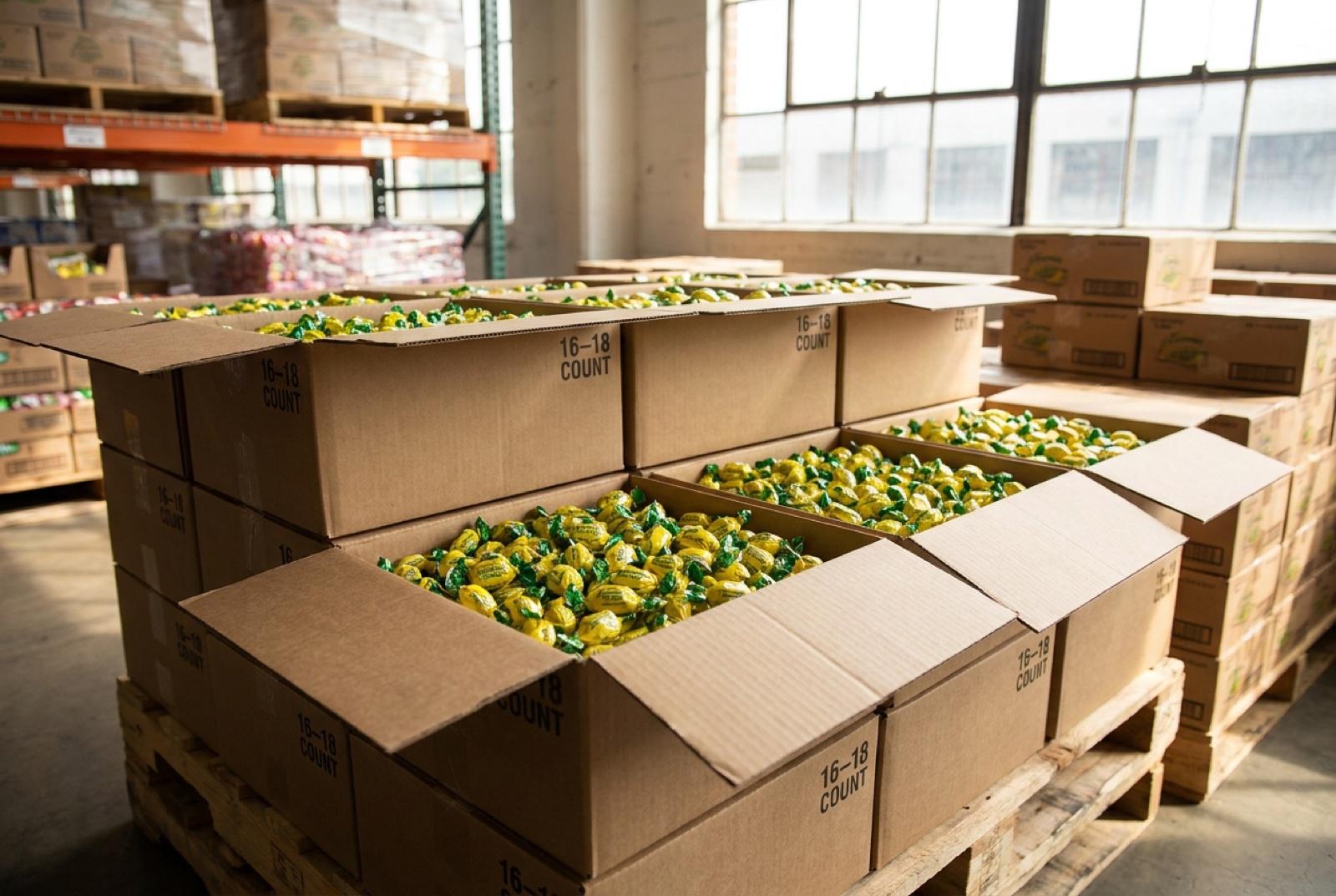
Authentic Sorrento Lemons from Italy – Flown Fresh from the Amalfi Coast 16–18 CT
- Selling unit: 1 case
- Case count shown in the product title: 16–18 lemons
- Store: Bellavita
- Catalog state checked November 25, 2026: in stock
- Live product: Authentic Sorrento Lemons from Italy – 16–18 CT
The current page does not state a verified net case weight. Cost and production planning should therefore begin with the count and the actual received weight, not an assumed pound conversion.
How to receive a case
Use a receiving check that separates identity, condition, and usable output.
- Match the product name and 16–18 count case to the order.
- Count the fruit and record the total received weight.
- Check the label for origin, IGP identification when required, packer information, and lot or date coding.
- Inspect for decay, shriveling, rind stains, freezing or chilling damage, cuts, punctures, bruising, and soft areas.
- Separate damaged fruit before it can contact sound fruit.
- Move accepted fruit to the operation’s designated citrus storage area.
UC Davis lists lemon quality indices as color intensity and uniformity, size, shape, smoothness, firmness, and freedom from decay and defects. The peel contains oil cells that can be damaged by physical pressure, so careful handling matters when zest is a planned output.
Storage guidance
UC Davis gives a general optimum storage range for lemons of 54–57°F (12–14°C) with 90–95% relative humidity, depending on cultivar, maturity at harvest, production area, and storage duration. It also notes that lemons can develop chilling injury and that ethylene exposure may accelerate deterioration and decay.
USDA Agricultural Research Service guidance gives a broader 44.6–53.6°F (7–12°C) range depending on cultivar, maturity, production area, and duration, with 85–95% relative humidity, and warns against storage below 44.6°F because lemons are chilling-sensitive.
For a working kitchen:
- follow the physical case or fruit label when it gives a more specific storage instruction;
- keep the fruit dry, ventilated, and protected from crushing;
- avoid strong-odor commodities;
- inspect the case during holding and remove decayed fruit;
- do not treat a generic storage range as a guaranteed shelf life.
The two cited ranges reflect different commodity guidance. The received label, maturity, condition, and the operation’s food-safety procedure control the final storage decision.
How to plan juice yield
For certified Limone di Sorrento IGP fruit, the production specification requires juice yield of at least 25% by weight. That threshold can be used as a minimum specification check, but not as a substitute for measuring the case received.
Use this method:
- Weigh the accepted whole fruit.
- Juice the fruit under the operation’s normal procedure.
- Weigh or measure the strained usable juice.
- Record seeds, pulp retained or removed, spillage, and fruit rejected after cutting.
- Calculate the actual yield.
Juice yield percentage = usable juice weight ÷ accepted whole-fruit weight × 100
Usable juice per lemon = total usable juice ÷ accepted lemon count
Because the current BoxNCase listing gives a 16–18 count but no verified case weight, a truthful case-level ounce estimate cannot be calculated before receipt. Count alone does not establish juice volume: fruit weight, maturity, internal condition, extraction method, and straining standard all affect output.
If the received fruit is verified as Limone di Sorrento IGP and weighs 85 grams per lemon—the specification’s minimum fresh-market fruit weight—theoretical minimum accepted fruit weight would be 1.36 kilograms for 16 fruit or 1.53 kilograms for 18 fruit. Applying the 25% specification threshold would equal 340 grams or 382.5 grams of juice, respectively. These are compliance-floor arithmetic scenarios, not a forecast for this case. Actual fruit may be heavier and actual juice yield must be measured.
How to plan zest yield
The protected-origin specification describes a medium-thick peel rich in essential oils, which is why the fruit is relevant for pastry, sauces, marinades, and beverage applications where peel aroma matters.
There is no verified universal zest yield per case. Measure it:
- Weigh or count the accepted fruit.
- Zest only the colored outer peel required by the recipe standard.
- Weigh the usable zest before drying, candying, infusion, or mixing.
- Record fruit lost to peel damage and the amount of white pith excluded.
Zest yield per lemon = usable zest weight ÷ lemons zested
For menu costing, run the test on at least one full received case rather than one unusually large fruit. Keep juice and zest as separate outputs so the kitchen can cost both uses without counting the same value twice.
Match the case to the menu
A 16–18 count case fits operations that can use both peel and juice while the fruit remains within the receiving standard. Common production paths include:
- zest for pastry, custards, syrups, marinades, and finishing;
- juice for sauces, dressings, seafood preparation, and nonalcoholic beverages;
- peel infusion for recipes that specifically call for aromatic citrus oil;
- preserved or candied peel when the recipe and food-safety process are already documented.
Do not assume that the entire peel is usable. Wash and handle the fruit according to the physical label and the operation’s produce procedure. If a recipe requires unwaxed, untreated, or certified-organic fruit, verify that requirement from the received label or manufacturer documentation; the current product title alone does not establish it.
A practical purchasing specification
Before adding the case to a recurring order, record:
- product: Authentic Sorrento Lemons from Italy – 16–18 CT;
- selling unit: one case;
- required count: 16–18 fruit;
- required origin or IGP labeling, if the menu depends on it;
- acceptable condition and defect tolerance;
- storage procedure;
- actual received case weight;
- measured juice yield percentage;
- measured zest weight per fruit;
- planned portions or batches per case.
After two or three receipts, compare actual juice, zest, cull rate, and menu usage. That record answers the real buying question: whether one 16–18 count case produces enough usable peel and juice for the operation’s recipes before quality declines.
Check the current 16–18 count Sorrento lemon case on BoxNCase
Sources
- BoxNCase — Authentic Sorrento Lemons from Italy – 16–18 CT, checked November 25, 2026
- Regione Campania — Limone di Sorrento I.G.P., checked November 25, 2026
- Regione Campania — Production specification for Limone di Sorrento IGP, checked November 25, 2026
- UC Davis Postharvest Research and Extension Center — Lemon, checked November 25, 2026
- USDA Agricultural Research Service — Lemon, checked November 25, 2026