

The Sweet Scoop
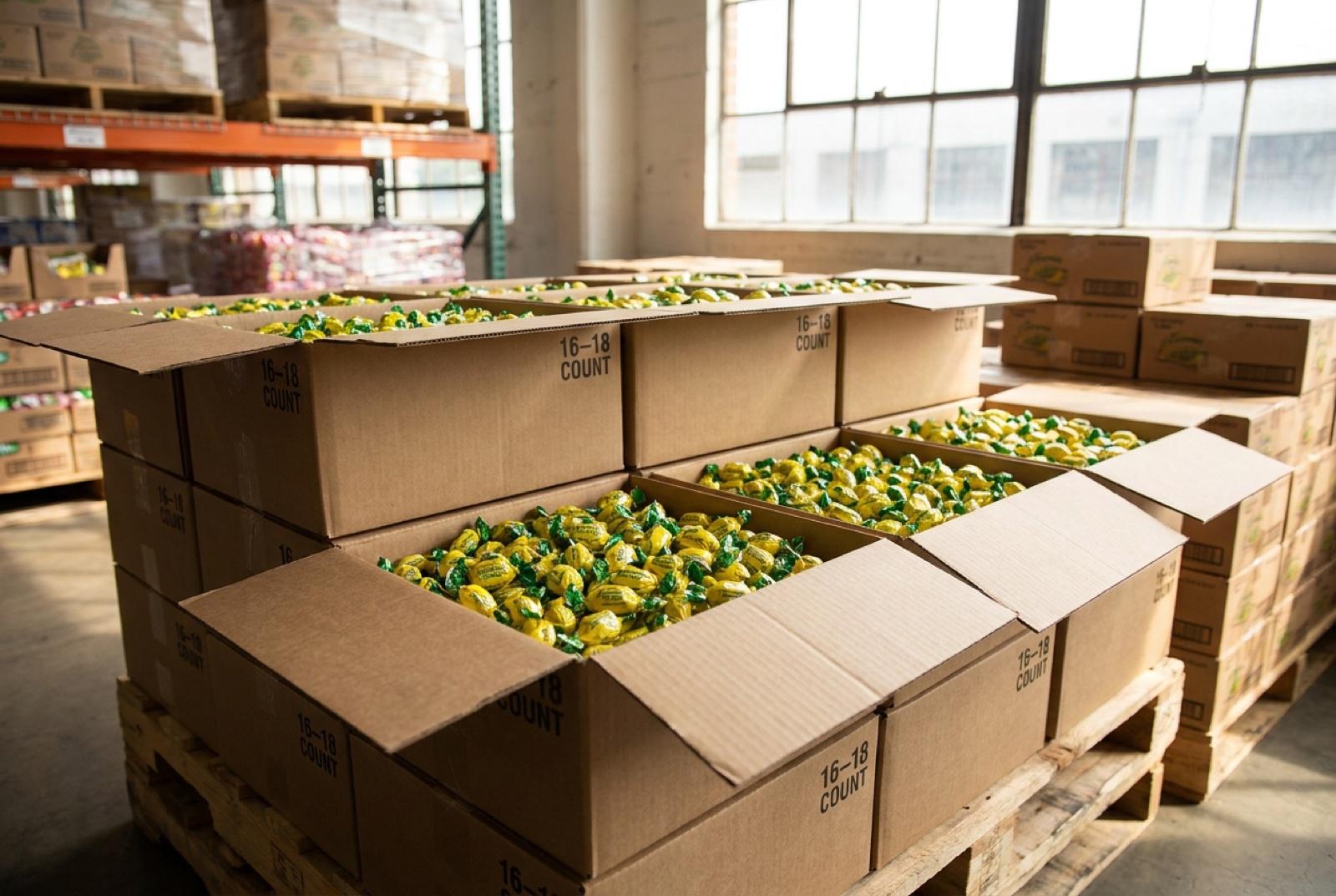
Authentic Sorrento Lemons: A Wholesale Buying Guide for 16–18 Count Cases
How to receive, store, and measure juice and zest yield from a 16–18 count case of Sorrento lemons.
NOV 25, 2026·BoxNCase Staff·7 min read
How to receive, store, and measure juice and zest yield from a 16–18 count case of Sorrento lemons.
A practical guide for demand signals, case ordering, and merchandising for Kool King Coconut Water.

How to Source Citrus Wholesale by the Case Buying citrus wholesale starts with the form the kitchen will actually use. Whole lemons, portioned orange juice, bottled key lime juice, and frozen grapefruit purée require different case math, storage controls, receiving checks, and yield assumptions. A low case price does n

Key Differentiators When Buying Specialty Produce Wholesale The useful differences between wholesale produce options are measurable: the named variety, case format, ripeness at receipt, condition standard, storage range, and usable yield after culling and prep. A broad label such as “tomatoes” is not enough for a resta

Wholesale Produce FAQ: Case Packs, Storage, Yield, and Ordering Buying produce by the case is straightforward only after the kitchen defines the unit, receiving standard, storage plan, and usable yield. A 10 lb case of heirloom tomatoes, a 50 lb case of russet potatoes, and a one-count case of cabbage do not create the

Norwich Meadows Farm Produce: What Chefs Should Know Before Ordering Norwich Meadows Farm grows certified-organic vegetables in Norwich, New York. Its current farm shop is built around seasonal produce rather than a fixed commodity list: harvest boxes change with the field, and specialty collections can include radicch

FOODMatch and Divina Olives for Foodservice: What Chefs Should Know Before Ordering FOODMatch is a producer and importer of Mediterranean specialty foods. Divina is its flagship brand. The company’s current catalog covers olives, antipasti, spreads, sauces, condiments, and foodservice ingredients, so “FOODMatch produce

Partners Coffee for Foodservice: What Chefs Should Know Before Ordering Partners Coffee is a Brooklyn coffee roaster, not a produce company. For a restaurant or café, the practical question is whether a specific Partners blend, bag size, grind, and brew recipe fit the service format. Partners says it has roasted coffee

Vital Farms Foodservice Eggs: What Chefs Should Know Before Ordering Vital Farms is an egg and butter brand, not a produce farm. For chefs, the useful sourcing question is therefore not “Vital Farms produce,” but which egg format matches the menu job: shell eggs for made-to-order cooking, liquid whole egg for measured

Savor Fresh Farms Melons: What Chefs Should Know and How to Specify Comparable Fruit Savor Fresh Farms is a specialty-melon grower associated with the Russell family and the Kiss Melons line. A January 2020 Yuma Sun profile names four varieties—Golden Kiss, Honey Kiss, Sugar Kiss, and Summer Kiss—and reports production

FirstFruits Apples: What Chefs Should Know and How to Specify Comparable Fruit FirstFruits is an apple, pear, and cherry grower-packer with operations tied to Washington and Michigan. Its current homepage says Washington’s FirstFruits Farms acquired Michigan’s Applewood Fresh in 2023 and that the combined business offe

Harry’s Berries Strawberries: What Chefs Should Know and How to Specify Comparable Fruit Harry’s Berries is a small organic family farm in Oxnard, California. The farm’s current Instagram profile identifies it that way, and the CCOF organic directory lists the certified operation as Gean Farm Inc. dba Harry’s Berries.

Family Tree Farms Fruit: What Chefs Should Know and How to Source Comparable Specialty Fruit Family Tree Farms is a three-generation farming business headquartered in Reedley, California. Its official industry page names David Jackson, Rick Jackson, and Daniel Jackson as owner-farmers and says the company grows, packs,

Barsuglia Farms Vegetables: What Chefs Should Know and How to Source Comparable Produce Barsuglia Farms is a family vegetable farm in Vineland, New Jersey. Its official site says Walter Barsuglia founded the operation in 1949 with green beans, cucumbers, and sweet potatoes. Maurice Barsuglia Sr. and Elaine Barsuglia jo

Bernard Ranch Citrus: What Chefs Should Know and How to Source Comparable Specialty Fruit Bernard Ranch is a small, family-run farm in Riverside, California, built around seasonal citrus rather than one standardized commodity line. Its own variety page lists avocados, Buddha’s hand citron, grapefruit, kumquats, lemons,

How to Source Edible Flowers Wholesale by the Case Edible flowers are fresh produce, not interchangeable decoration. A purchasing specification should identify the flower or mix, edible form, case format, expected usable weight or count, flavor, color, storage instruction, and target portion. Florist flowers and uniden

How to Source Fresh Truffles Wholesale by the Case Fresh-truffle purchasing starts with the species, harvest season, received weight, condition, and planned grams per plate. “Fresh truffle” is not a complete specification. Black winter, black summer, Burgundy, and white winter truffles differ in aroma, preparation, sea

How to Source Heirloom Tomatoes Wholesale by the Case Heirloom tomatoes vary more than a standard round-tomato case. Fruit in one case may differ in color, shape, size, firmness, seed-cavity structure, and usable slice count. That variation is part of the category, but it also means a restaurant should buy against a wr

How to Source Mushrooms Wholesale by the Case Mushroom purchasing starts with four fields: species, form, case weight, and intended preparation. “Mushrooms” is not a complete specification. A 10-pound case of whole white mushrooms, a 5-pound case of sliced portabella, and a 3-pound case of maitake behave differently in

How to Source Microgreens Wholesale by the Case Microgreens are harvested after germination, generally around the emergence of the first true leaves. They are not sprouts. FDA distinguishes them by growth stage and production method: microgreens are typically grown in soil or another substrate and harvested above that

How to Source Tropical and Specialty Fruit Wholesale by the Case Tropical and specialty fruit should be bought to a written specification, not as a generic “exotic fruit” category. Dragon fruit, green cooking papaya, passion fruit, rambutan, and star fruit differ in edible portion, ripening behavior, temperature tolera

How to Source Tomatoes Wholesale by the Case Wholesale tomato buying starts with use, maturity, size, and net case weight. A tomato selected for sandwich slices is not interchangeable with a plum tomato selected for sauce, a grape tomato selected for salad service, or a mature-green tomato intended to ripen after deliv

How to Source Stone Fruit Wholesale by the Case Stone fruit purchasing starts with the exact fruit, cultivar or commercial type, maturity, size or count, and case weight. Peaches, nectarines, apricots, plums, and cherries differ in pit loss, ripening behavior, bruise sensitivity, storage life, and usable yield. A case

How to Source Melons Wholesale by the Case Wholesale melon buying starts with the variety, the selling unit, and the intended cut. A one-count cantaloupe, honeydew, Galia melon, or watermelon is not interchangeable with a standard produce carton or a case of prepared chunks. The invoice unit may be “1ct Case,” but usab

How to Source Mangoes Wholesale by the Case Wholesale mango buying starts with format. Whole fruit, fresh-cut pieces, frozen pulp, frozen IQF fruit, and dried mango are not interchangeable even when the case weights match. They require different receiving checks, storage controls, labor, and yield assumptions. The four

How to Source Grapes Wholesale by the Case Buying grapes wholesale starts with the selling format, not the variety name. A case may contain retail-ready inner packs or one bulk pack, and two cases with the same total weight can create different labor, merchandising, and waste profiles. Write the specification around va

How to Source Figs Wholesale by the Case Buying figs wholesale starts with a basic distinction: fresh figs and dried figs are not interchangeable inventory. Fresh figs are highly perishable and need cold-chain control. Dried figs provide more stable portion and case math, but pack style, net weight, seal integrity, and

How to Source Berries Wholesale by the Case Buying berries by the case starts with the product form, net case weight, inner-pack count, grade or condition standard, storage state, and intended yield. A fresh eight-pound strawberry case, a 30-pound case of individually quick-frozen fruit, and a case of portioned freeze-

How to Source Avocados Wholesale by the Case Buying avocados by the case starts with form, ripeness stage, case weight, inner-pack size, and intended yield—not the word “case.” Whole green fruit, ripe fruit, plain pulp, chunky pulp, frozen pulp, and prepared guacamole are different purchasing units. They require differ

How to Source Apples Wholesale by the Case Buying apples by the case starts with count, variety, grade, and processing format—not the word “case.” A 100-count case contains 100 whole apples. An 80–88-count case contains fewer, larger pieces. A 40 lb case of frozen sliced apples is a weight-based ingredient, not a whole

How to Source Seafood Wholesale by the Case Seafood case buying starts with the exact selling format. A 20-count case of 1 lb shrimp bags contains 20 lb. A 12-count case of 3.9 oz salmon cans contains 46.8 oz. A 10 lb salmon case and a 25 lb king crab case may both be sold as one case, but their usable yields cannot be

How to Source Bakery Wholesale by the Case Bakery purchasing starts with the selling format. A 60-count case of 3.5 oz pita contains 210 oz of product. A 98-count case of 3.5 oz ready-to-bake croissants contains 343 oz. A case of eight 12 oz pita bags contains 96 oz and, when each bag holds six pitas, 48 individual bre

How to Source Cheese Wholesale by the Case Cheese purchasing starts with the case hierarchy, not the product name. A 5 oz cheese sold six to a case is a 30 oz purchasing unit. A 7 oz cheddar sold 12 to a case is an 84 oz purchasing unit. A five-pound wheel is one 80 oz unit. Those formats behave differently in receivin

How to Source Dairy Wholesale by the Case Dairy purchasing starts with three facts that are easy to confuse: the unit size, the units per case, and the storage class. A gallon of milk sold 16 to a case is a 16-gallon purchasing unit. A 12 oz can sold 24 to a case is a 288 oz purchasing unit. A five-pound box of milk po

How to Source Specialty Grocery Wholesale by the Case Specialty grocery purchasing starts with the case hierarchy. Record the unit size, units per case, total case quantity, package material, storage class, date code, and the amount your operation issues per use. A 6.26 oz jar sold 12 to a case is a 75.12 oz purchasing

How to Source Meat and Poultry Wholesale by the Case Buying meat and poultry wholesale starts with the case hierarchy, not the product headline. Record the inner-pack weight, number of packs or pieces, total case weight, refrigerated or frozen state, and the portion basis your kitchen actually uses. A 5 lb unit can mea

How to Source Fresh-Cut Produce Wholesale by the Case Fresh-cut produce wholesale buying starts with three numbers: the weight of each inner pack, the number of inner packs in the case, and the usable quantity required by the menu or production plan. Cut style matters too. A 1/2-inch dice, julienne strip, coin cut, and

How to Source Vegetables Wholesale by the Case Wholesale vegetable buying starts with a usable-yield plan, not a case price. A buyer needs to know the pack hierarchy, whether the product is trimmed, the storage temperature, and how many finished portions the case can support. Without those fields, two cases with simila

How to Source Fruits Wholesale by the Case Wholesale fruit buying works best when every order starts with four numbers: pack size, fruit count or cut, storage temperature, and usable yield. A case price without those fields does not tell a kitchen what it can portion or what it may lose in prep. BoxNCase lists fruit by

Holiday candy sets and stocking-stuffer ideas that drive impulse buys and big margins in 2026.

A practical guide to sizing candy buffets by guest, color, and theme using real trade math.

Choosing between theater boxes and peg bags: a buyer’s guide grounded in 2026 c-store economics and shopper impulse.

Creamy Cambozola on crisp endive with pear relish and Grinch Crunch garnish.

Explains who changemakers are and why the register tub delivers top margins and impulse power in today’s c-store setup.

A bulk-friendly snack mix with roasted nuts, cranberries, and crumbled That'S It fruit bars for bright flavor.

Bulk-friendly quinoa bowl with lemon-olive dressing, roasted veggies, and herb chicken—olive oil spotlight for foodservice prep.

Fragrant root veg roast with cardamom and star anise, finished with a honey glaze.

Wholesaler-friendly crostini bites with Sweet Grass Pimento Cheese, Jarlsberg Snacks, and a Cambozola drizzle for easy menu prep.

A practical guide to hitting fundraising margins with candy and fundraiser packs for schools and teams.

Crisp cracker cups filled with herbed cheese – a budget-friendly snack using BoxNCase crackers.